
The Symptoms of dengue over time

Most people with dengue fever have no symptoms. For those who do experience symptoms, they are typically mild and get better within 1–2 weeks. [1] Although symptoms and individual experiences of dengue fever vary, the infection can progress through a series of phases, outlined below. [2], [3]


Dengue’s incubation phase

The signs and symptoms of dengue take time to develop. [1] After being bitten by an infected mosquito, the dengue virus replicates in the body. This period of time, before symptoms develop, is called the incubation phase. [2], [3]


Dengue’s ‘febrile’ (feverish) phase

The initial symptoms of dengue usually develop around 5–7 days after infection, and last up to a week This is called the ‘febrile’ (meaning feverish) phase. [2], [3] The majority of cases are mild, and most people recover after this phase. [1], [2]


If you are experiencing symptoms of dengue fever, contact your doctor right away. [4], [5]

Symptoms of mild dengue include: [1]

  • High Fever (40°C/104°F)
  • Severe headache
  • Swollen glands
  • Pain behind the eyes
  • Muscle and joint pain
  • Nausea and vomiting
  • Rash
     
Image

If you have a fever, common recommendations include: [4], [5]

  • Rest
  • Drinking plenty of fluids
  • Do not self medicate, especially with aspirin and ibuprofen as they can thin the blood which may increase the risk of bleeding


If you are experiencing any symptoms of dengue fever, contact your doctor right away. [4], [5]


Dengue’s ‘critical’ phase: severe dengue

Around 1 in 20 people who experience symptoms of dengue fever go on to develop severe dengue. This is called the critical phase, which can be life-threatening and usually lasts 24–48 hours. [3] Signs of severe dengue usually begin around 1–2 days after the fever has gone away. [3]


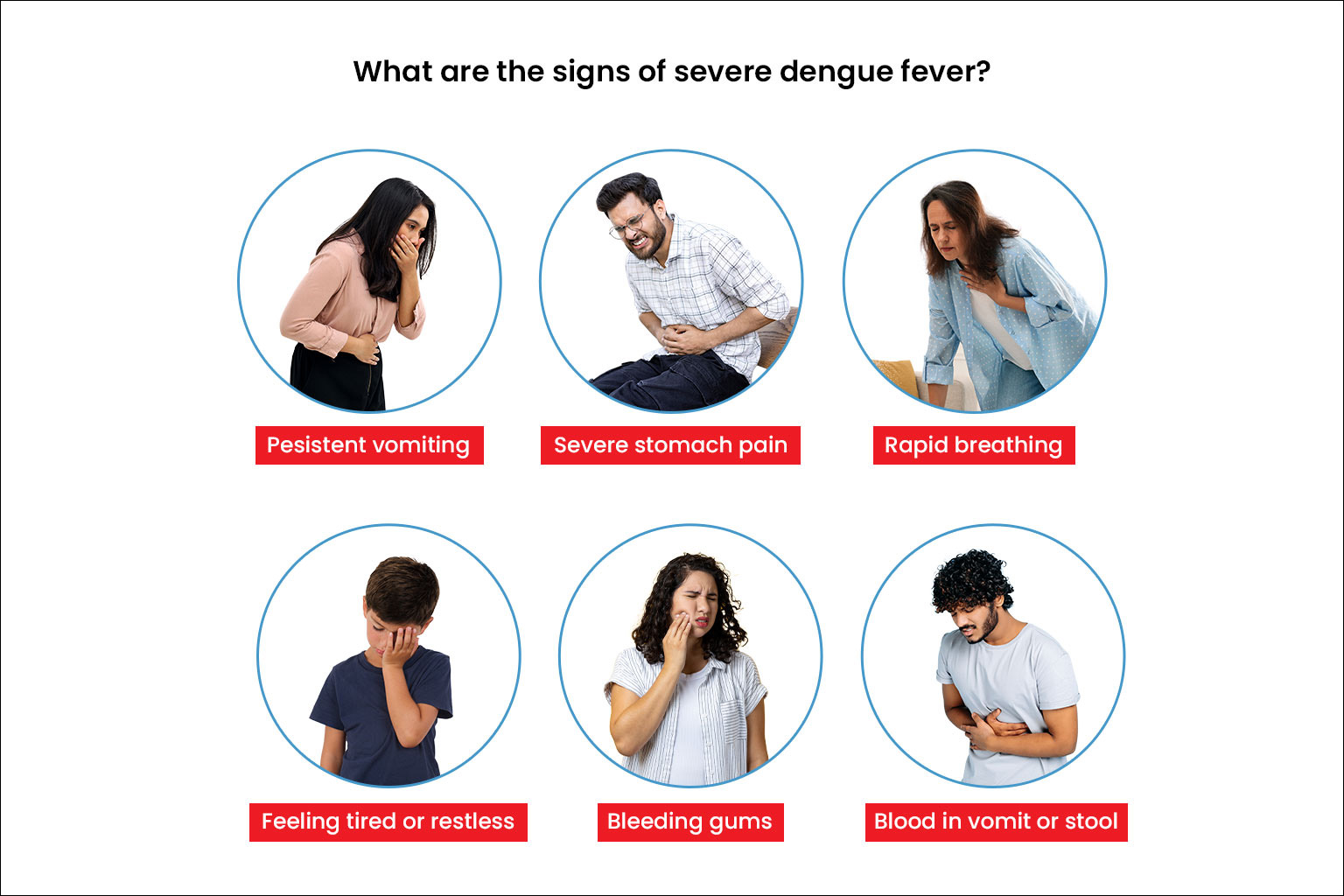
Warning signs of severe dengue include: [1], [3]

  • Persistent vomiting
  • Severe stomach pain
  • Rapid breathing
  • Feeling tired or restless
  • Bleeding gums
  • Blood in vomit or stool
     
Image

Studies suggest that young children may be more likely to develop severe dengue than others. [6], [7], [8] Learn more about dengue in children.

People who have previously been infected with the dengue virus are also more likely to develop severe dengue. [1]

Contracting severe dengue should be considered a medical emergency. If you develop any of these warning signs, go to a hospital immediately. [5]


Dengue’s recovery phase

The final phase of dengue fever is called the recovery phase. During this phase, the body gradually begins to recover, and symptoms will improve. [2], [3]


Prioritize dengue prevention

There is currently no specific treatment for Dengue, so prevention is key. [1], [10] Learn more about dengue prevention.

C-ANPROM/IN/QDE/0036, Date of Preparation: December 2025

References